
Nighttime Astigmatism: Understanding Light Perception After Dark



When it comes to understanding visual impairments, astigmatism is a common condition that often comes into focus. If you have astigmatism, you might find that you perceive light differently than those with standard vision, especially once the sun goes down. Let’s delve into the topic and unravel how astigmatism can affect light perception, and discover how Zenni can assist in navigating these visual challenges.
Astigmatism Explained
Astigmatism is a refractive error causing blurred or distorted vision at all distances, both near and far. This visual anomaly is typically due to an irregularly shaped cornea – the clear, round dome covering the eye’s front. This irregular shape causes light to scatter rather than to focus directly on the retina, leading to blurred or distorted vision.
Effects on Light Perception
Now that we understand what astigmatism is, let’s discuss how it influences light perception. Here are a few common experiences:
- Blurred Vision: As light fails to focus on a single point on the retina, it can result in blurred vision. This effect is common both at night and during the day.
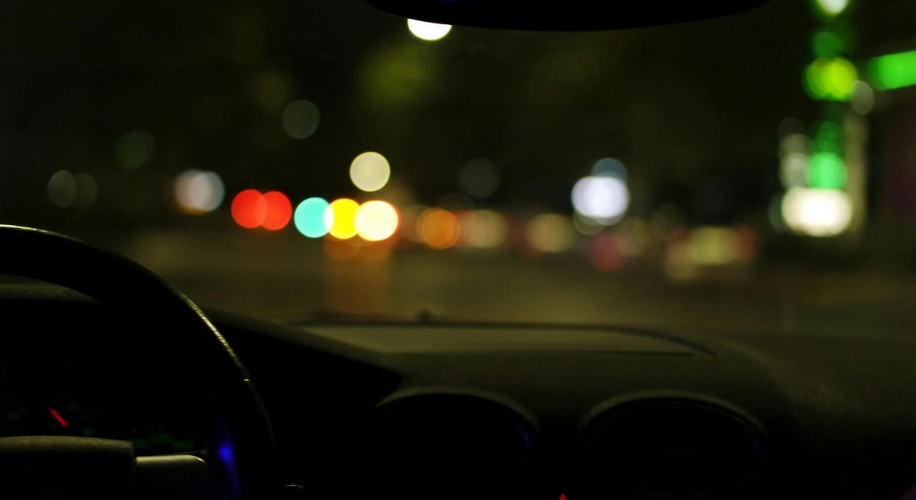
- Difficulty with Night Vision: You might find it difficult to see or drive in low light conditions. Car headlights and streetlights can appear surrounded by a halo, and some people also notice streaks or starburst-like flares radiating from bright points of light.
- Increased Light Sensitivity: Astigmatism can often make your eyes more sensitive to light, a condition known as photophobia. Bright lights might seem too harsh, leading you to squint or close your eyes. Zenni’s FL-41 lenses are designed specifically to ease this kind of light sensitivity.
Why Nighttime Astigmatism Happens
At night, your pupils dilate to let in more available light. For most people, this simply helps with seeing in the dark, but if you have astigmatism, a wider pupil exposes more of your eye’s irregular curvature to incoming light. That extra surface area scatters light instead of focusing it cleanly, which is why night driving and other low-light activities often feel harder than daytime tasks.
This scattering is also related to what eye doctors call higher-order aberrations, subtler irregularities like coma and spherical aberration that exist alongside astigmatism itself. They can add to the halos, glare, and comet-like streaks some people see around lights at night, especially as pupils widen further.
If you often drive after dark, small adjustments can help: dim your dashboard lights to reduce contrast with the dark road, avoid staring directly at oncoming headlights, take breaks on longer drives to rest your eyes, and give your eyes a few moments to adjust when moving from a bright space into the dark. Zenni’s night driving glasses use NeoContrast lens technology to cut glare and sharpen contrast in low light conditions.
Managing Astigmatism
The good news is that astigmatism is easily correctable with the right eyewear. Custom corrective lenses, often toric in shape, are designed to counteract the cornea’s uneven curvature, allowing light to focus properly on your retina. Toric contact lenses work the same way for contact lens wearers, aligning with the eye’s curvature rather than sitting evenly like a standard lens. Additionally, lens coatings such as anti-reflective or photochromic can help manage light sensitivity and glare. For a more permanent option, refractive surgery such as LASIK or PRK can reshape the cornea to correct astigmatism, though it is best discussed with your eye doctor to see if you are a candidate. Zenni offers a wide range of frames and lenses.

So, while astigmatism does affect light perception, it isn’t a cause for worry. Awareness of the condition and understanding your specific symptoms can lead to effective management and clearer, more comfortable vision. Remember to have regular eye exams and to keep your prescription up-to-date for the best possible vision correction. Ready to update your look? Explore Zenni’s eyeglasses to find your next pair.

FAQs
What’s the difference between astigmatism and keratoconus?
Astigmatism is a common refractive error from a cornea or lens that isn’t perfectly round and can be corrected with glasses, contacts, or surgery. Keratoconus is a distinct condition where the cornea thins and bulges into a cone shape, causing irregular astigmatism that glasses can’t fully fix. Worsening night vision or frequent prescription changes are worth flagging to your eye doctor.
How do eye doctors diagnose astigmatism?
A standard refraction test, the same one used for your glasses prescription, identifies astigmatism and its degree. For a closer look, doctors may also use corneal topography or aberrometry, tools especially useful for detecting irregular astigmatism or keratoconus.
What are higher-order aberrations, and how are they different from astigmatism?
Astigmatism is a lower-order aberration, common and easy to correct with glasses. Higher-order aberrations, like coma and spherical aberration, are subtler light-travel irregularities that can add to glare, halos, and starbursts, especially at night.
Why do headlights look like they have starbursts or streaks at night?
Light scatters across the eye’s irregular surface instead of focusing to one point. Coma can add a comet-like streak to one side of a light, while spherical aberration creates a rounder halo, both more noticeable at night as pupils widen.
Can LASIK or PRK permanently correct astigmatism?
Yes, for many people. LASIK and PRK reshape the cornea, reducing or eliminating the need for glasses or contacts. Orthokeratology (overnight lenses) can also help with milder astigmatism, though it’s less effective for higher amounts. Your eye doctor can help you choose.
What practical steps help with night driving if I have astigmatism?
Dim your dashboard lights, avoid looking directly at oncoming headlights, take breaks on long drives, and give your eyes a moment to adjust in the dark. Keeping your prescription current matters most, and Zenni’s night driving glasses with NeoContrast lens technology help reduce glare.
Is astigmatism-related night vision trouble the same thing as night blindness?
No. Astigmatism’s halos, streaks, and blur come from your eye’s own curvature, and correction improves them. Night blindness (nyctalopia) is separate, where eyes struggle to adapt to low light at all, sometimes linked to vitamin A deficiency or retinal issues, and needs its own evaluation.

Dr. Steven Liem
Dr. Steven Liem, O.D., F.A.A.O. is an optometrist based in Pasadena, California. After obtaining his doctorate from UC Berkeley’s School of Optometry, he completed his residency in Pediatrics, Vision Therapy & Rehabilitation and became a Fellow of the American Academy of Optometry. When he isn’t busy streaming or making Youtube videos about video games, Dr. Liem aims to broaden accessibility to vision health through his involvement in optometric industry and tech.




 Canada