
EyeQLenz™ with Zenni ID Guard™: Eye Defense Meets Digital Privacy



What is Near-Infrared (NIR) Light?
Near-infrared (NIR) light is a type of infrared radiation just beyond what the human eye can see. It’s a natural part of sunlight, but it’s also used by many facial recognition systems, which has raised real questions about digital privacy. Here’s what NIR light is, where facial recognition shows up in daily life, and how Zenni’s EyeQLenz™ with Zenni ID Guard™ lenses fit into the picture.
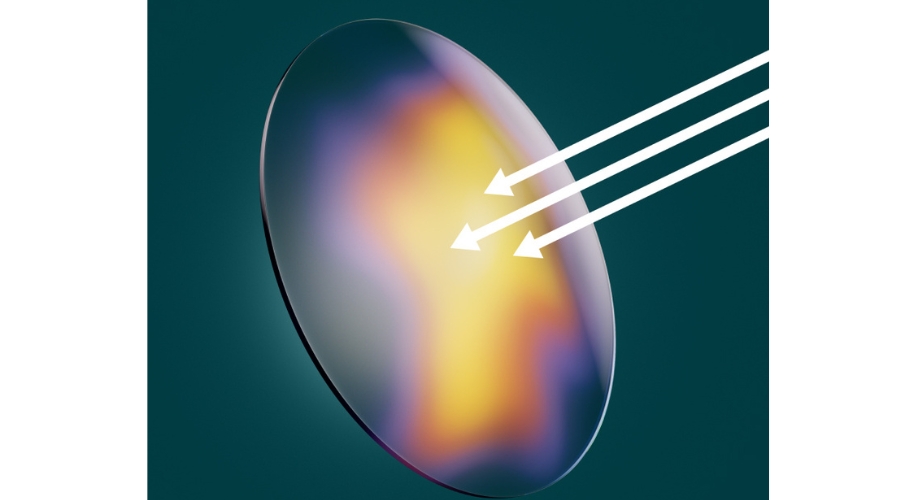
NIR light falls just beyond the visible spectrum. It’s invisible to the naked eye but makes up a meaningful share of the sun’s radiation. NIR doesn’t cause sunburn the way UV light does.
Where NIR Comes From
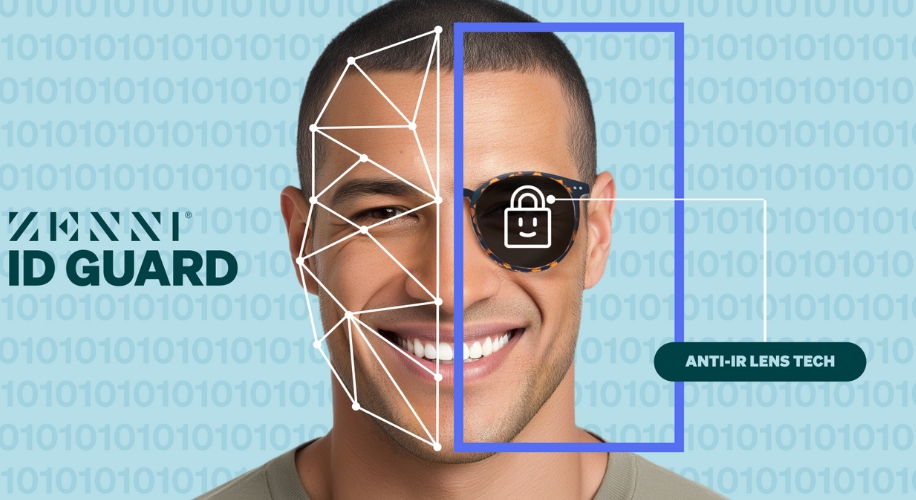
The sun is the largest natural source of NIR light. Artificial sources include infrared heaters, night-vision equipment, and facial recognition systems, which use NIR to capture detailed facial data even in low light.
NIR and Facial Recognition
Facial recognition technology (FRT) often relies on NIR light to map facial features with more precision than a standard photo. This is especially true of 3D facial recognition, which builds a depth map of your face rather than just a flat image. Because this scanning happens with invisible light, it can occur without a person realizing it.
Where Facial Recognition Shows Up in Everyday Life
FRT has expanded well beyond airport security. A few places it shows up:
- Stadiums and concerts, where some venues use facial scans to replace tickets or speed up entry.
- Airports, where face scanning at boarding gates and TSA checkpoints is common, even though it’s often optional.
- Retail stores and workplaces, where cameras may track shopper behavior or manage employee access.
- Homes and short-term rentals, where smart doorbells and hidden cameras can capture more than guests expect.
- Online, where cookies, device fingerprints, and Bluetooth beacons quietly track behavior and location, separate from any camera at all.
Privacy Implications
Because much of this scanning is invisible or easy to overlook, biometric data like facial scans can be collected, stored, and potentially misused without a person’s knowledge, raising real concerns about surveillance and personal autonomy.
What Can You Do?
You don’t need to overhaul your life to reduce unwanted tracking. A few practical habits help:
- Look for signage that discloses video or biometric monitoring, and ask whether participation is optional.
- Check hotel rooms or rentals for unfamiliar devices or small reflective lenses that could be hidden cameras.
- Limit app permissions and turn off Bluetooth and Wi-Fi when you don’t need them.
- Consider accessories built to reflect or scatter infrared light, which can make it harder for some cameras to capture a clear facial scan.
How EyeQLenz™ with Zenni ID Guard™ Helps
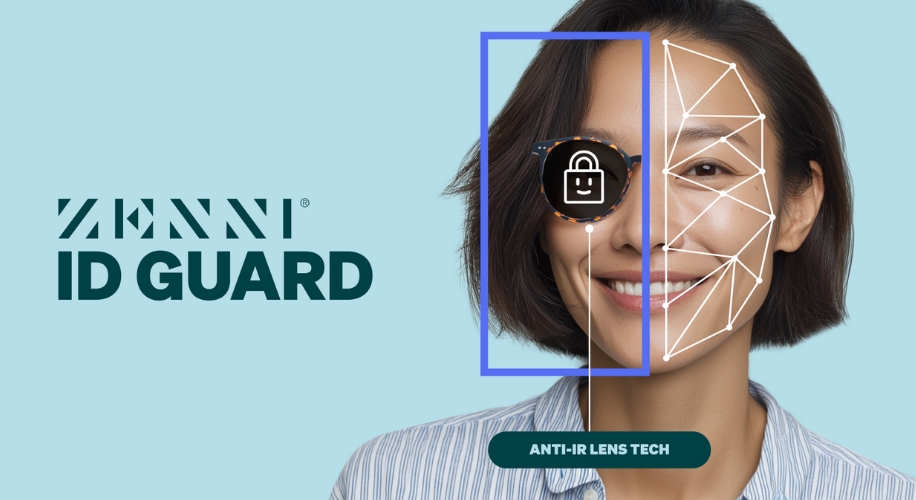
Zenni’s EyeQLenz™ with Zenni ID Guard™ is a lens technology built around this last idea. Its anti-infrared coating, called Zenni ID Guard, reflects a large share of near-infrared light, which can interfere with some of the same NIR wavelengths that certain facial recognition and biometric systems rely on. In testing, the coating reflected up to 80% of near-infrared wavelengths. Some wearers notice it can interfere with phone features like Face ID or Windows Hello, which is actually a sign the coating is working as intended, since those features also depend on infrared light.
You’ll know the coating is active by the lens’s subtle pink sheen, a visible cue that doesn’t affect how clearly you see but may be noticeable to others or when you view yourself in a mirror or on a video call.
This is a one-time feature built into your lenses, not a subscription or monitoring service, so there’s nothing to sign up for or renew. It’s best suited for anyone who wants a passive layer of protection against IR-based scanning without changing how they use their phone, computer, or daily routine.
What EyeQLenz™ with Zenni ID Guard™Offers
- Anti-infrared protection: Reflects near-infrared light to help limit certain kinds of biometric scanning.
- Complete UV protection: Blocks 100% of UVA and UVB rays.
- Blue light filtering: Reduces blue light from digital screens for more comfortable extended use.
- Light-adaptive tint: Stays virtually clear indoors and darkens automatically outdoors, in your choice of seven colors.
- Water-resistant coating: Repels moisture, keeping lenses clearer and easier to clean.
The infrared-reflecting coating is also available on other Zenni lenses, including Blokz®, so you’re not limited to a single lens type if you want this added layer of privacy.
- EyeQLenz with Zenni ID Guard starts at $54.95, with the infrared-reflecting coating included at no extra cost, so you’re not paying a separate fee for the privacy feature on top of the lens itself.
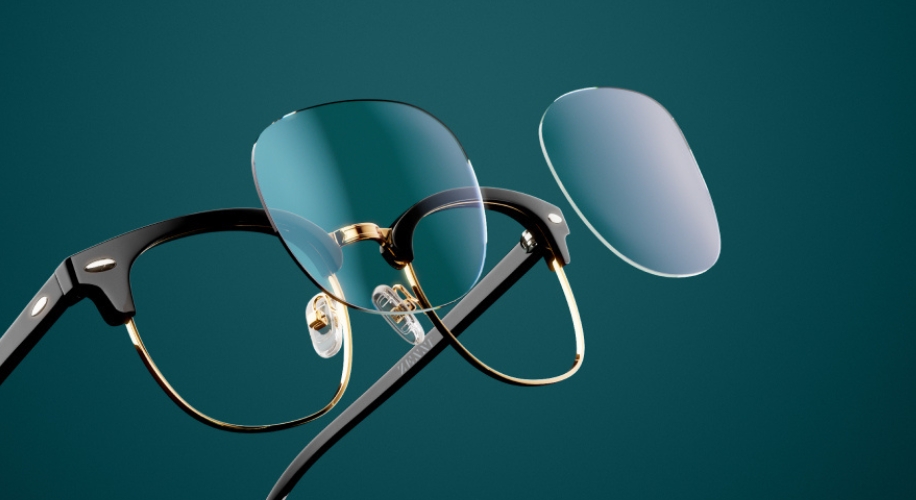
With EyeQLenz™ with Zenni ID Guard™, you can safeguard your eyes from harmful light exposure while also defending against unwanted tracking in an increasingly digital world. Whether you’re outdoors in the sun, navigating through a busy public space, or simply using your digital devices, EyeQLenz™ with Zenni ID Guard™ offers the ultimate protection for both your vision and personal security.
A Realistic View of Privacy Eyewear
It’s worth being clear about what this technology can and can’t do. Reflecting infrared light can make it harder for some IR-based scanning systems to capture a clean read of your face, but it isn’t a guarantee of anonymity, and it won’t block every form of surveillance, especially systems that rely on standard visible-light cameras rather than infrared ones. Think of it as one more layer of protection alongside the everyday habits above, not a replacement for them.
A few practical limitations are worth knowing before you buy: EyeQLenz™ with Zenni ID Guard™ isn’t currently available in reader or bifocal prescriptions, and the photochromic tint won’t darken while driving, since most car windshields already have built-in UV protection, which prevents the tint from activating. It may also interfere with infrared-based phone unlocking, which some wearers see as a downside rather than a bonus.
Take Control of Your Privacy and Eye Health
Digital surveillance is becoming part of everyday life, making it worth understanding both where scanning occurs and which tools can help. EyeQLenz™ with Zenni ID Guard™ combines UV protection, blue-light filtering, and Zenni’s infrared-reflecting coating in a single pair of glasses, so you can address your eye health and privacy at the same time. Shop EyeQLenz glasses frames to find a style that fits your day.

FAQs
What is Zenni ID Guard?
It’s Zenni’s anti-infrared lens coating, designed to reflect near-infrared light and help limit certain kinds of facial recognition and biometric scanning. It’s included with EyeQLenz™ and available on select other lenses.
Does EyeQLenz™ with Zenni ID Guard™ really block facial recognition?
Not entirely. The coating reflects a large share of near-infrared light, which can interfere with certain IR-based scanning systems, but it doesn’t guarantee anonymity or block all forms of digital tracking.
Why do my lenses have a pink sheen?
The pink tint is the visible sign of the anti-infrared coating at work. It doesn’t affect vision clarity or change how your glasses look in normal wear.
Will these glasses interfere with Face ID or Windows Hello?
They might. Since those features rely on infrared light to scan your face, the same coating that reflects near-infrared light for privacy can also interfere with infrared-based phone unlocking.
Is near-infrared light harmful on its own?
It can contribute to skin and eye effects over time, similar to UV light, since it penetrates beneath the surface. EyeQLenz™ addresses both UV and near-infrared exposure in one lens.
Can I get this coating on lenses other than EyeQLenz™ with Zenni ID Guard™?
Yes. The infrared-reflecting coating is also available to select for certain Zenni lenses, including Blokz, and is included with EyeQLenz™.

Dr. Steven Liem
Dr. Steven Liem, O.D., F.A.A.O. is an optometrist based in Pasadena, California. After obtaining his doctorate from UC Berkeley’s School of Optometry, he completed his residency in Pediatrics, Vision Therapy & Rehabilitation and became a Fellow of the American Academy of Optometry. When he isn’t busy streaming or making Youtube videos about video games, Dr. Liem aims to broaden accessibility to vision health through his involvement in optometric industry and tech.




 Canada