
ANSI Z87.1 Safety Glasses: Your Guide to Standards and Certification




Photo by Chevanon Photography
In a world where safety is paramount, protecting your vision is non-negotiable. Whether you’re at work or play, safeguarding your eyes against potential hazards is crucial. That’s where ANSI Z87.1 comes into play, meeting the gold standard in eye protection now defined by the current ANSI/ISEA Z87.1-2025 standard.
What Does It Mean?
The ANSI Z87.1 certification is a rigorous set of safety standards specifically designed for eye protection. The standard itself is developed and published by the International Safety Equipment Association (ISEA), then accredited and issued by the American National Standards Institute (ANSI), which is why you’ll often see it referred to as ANSI/ISEA Z87.1. The current, most recent edition is ANSI/ISEA Z87.1-2025, which updated the prior 2020 edition with expanded product marking guidance and clarified testing requirements. This comprehensive standard outlines the requirements for safety glasses and other protective eyewear to ensure they can withstand various hazards without compromising the wearer’s vision.
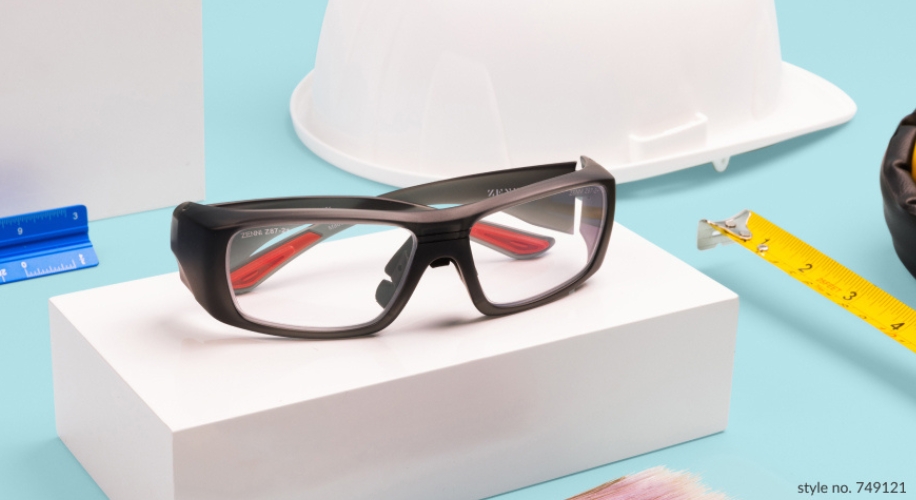
Shop These Frames
Key Features
To meet ANSI Z87.1 standards, protective eyewear must possess specific properties designed to ensure maximum safety and durability. These properties include:
- Impact Resistance: Eyewear must undergo rigorous testing to withstand high-velocity impacts without shattering or fragmenting, ensuring protection against flying debris and projectiles.
- Optical Clarity: Lenses must provide clear vision without distortion, ensuring the wearer can see clearly and accurately in various work conditions.
- UV Protection: Eyewear should offer adequate protection against harmful UV radiation, safeguarding the eyes from long-term damage caused by sun exposure.
- Coverage Against Hazards: Eyewear must protect against workplace hazards such as dust, liquid splash, and chemical splatter, ensuring comprehensive eye protection.
Understanding the Z87 Marking System
Every pair of ANSI Z87.1 safety glasses has a permanent marking that tells you exactly what protection it provides. Here’s what the most common markings mean:
- Z87: Basic impact protection, meeting the standard’s baseline requirements for everyday hazards.
- Z87+: High-impact protection, tested to withstand higher-velocity impacts than basic Z87 markings.
- Z87-2: Prescription safety eyewear, indicating the frame and lenses are rated for prescription use.
- D3: Rated for splash and droplet protection, useful in labs and chemical-handling environments.
- D4 and D5: Rated for dust and fine dust protection, respectively.
- H: Extended coverage, indicating the eyewear covers more of the face than standard frames.
Look for the marking etched or stamped on the frame’s temple or the lens itself. If you’re shopping for ANSI Z87.1 prescription safety glasses, checking for the Z87-2 marking on the frame confirms it’s built to handle vision correction alongside impact protection.
Eyewear Types for Every Work Environment
ANSI Z87.1 rated eyewear comes in several forms, and the right one depends on where you’ll be wearing it.
- Outdoor Work Environments: Construction and landscaping crews face flying debris, dust, and UV radiation, so wraparound frames with side protection and UV-blocking lenses are the standard choice.
- Indoor Workplaces: Manufacturing plants, laboratories, and warehouses call for impact-resistant lenses and sealed frames that guard against airborne particles and chemical splashes.
- Healthcare Settings: Frontline healthcare workers rely on ANSI Z87.1 rated goggles and face shields to protect against infectious agents and contact with medical equipment.
- Construction Sites: Heavy machinery and building materials make ANSI Z87.1 eyewear a non-negotiable requirement, with impact resistance as the top priority.
Whichever environment you’re working in, Zenni’s safety glasses collection includes frame styles built for each of these settings.
Safety Glasses in the Workplace
According to the National Institute for Occupational Safety and Health, roughly 2,000 U.S. workers sustain a job-related eye injury requiring medical treatment every day, and most of these injuries are preventable with the proper selection and use of eye protection. OSHA requires employers to ensure the safety of all employees in the work environment, and eye and face protection must be provided whenever necessary to protect against chemical, environmental, radiological, or mechanical hazards.
Whether you’re working in a high-risk industrial environment or engaging in recreational activities with potential eye hazards, having eyewear that meets ANSI Z87.1 standards is crucial. This standard ensures that your safety glasses are capable of withstanding impact from flying debris, chemicals, and other potential dangers, reducing the risk of eye injuries significantly. By adhering to ANSI Z87.1, manufacturers guarantee that their eyewear provides reliable protection, giving wearers the confidence to tackle any task without compromising their vision’s safety.

Choosing the Right Fit
Finding safety glasses that fit well starts with understanding the hazards you’re protecting against.
- Assess the Risk: Consider the specific hazards in your workplace, whether that’s large flying particles, chemical splashes, or intense light sources, since the nature of the risk determines which protection level and marking you need.
- Prioritize Fit and Comfort: Glasses that fit well are more likely to be worn consistently. Look for secure temple arms and a frame shape that suits your face.
- Account for Your Vision Needs: If you wear prescription glasses, look for Z87-2 marked frames built to accommodate a prescription, or safety glasses designed to fit over your existing eyewear.
- Choose Impact-Resistant Lenses: Polycarbonate and Trivex are the most impact-resistant lens materials available for safety eyewear, and both are available with anti-scratch and anti-fog coating options.
A poor fit is one of the most common reasons safety eyewear ends up sitting in a drawer instead of on your face, so take the time to get sizing right before you buy.
Caring for Your Safety Glasses
Proper maintenance keeps your safety glasses performing at their best:
- Clean Regularly: Use mild soap and water on lenses and frames, and avoid harsh chemicals that can damage protective coatings.
- Inspect for Damage: Check for scratches, cracks, or other damage before each use, and replace your glasses if you spot anything that compromises the frame or lens.
- Store Properly: Keep glasses in a protective case when not in use to prevent accidental damage.
Safety glasses are an investment in your well-being, and a few minutes of care extends both their protective performance and their lifespan.
We understand the importance of prioritizing eye safety without sacrificing style or comfort. That’s why we’re proud to offer a wide range of safety glasses and protective eyewear that meet or exceed ANSI Z87.1 standards. Our commitment to quality and innovation ensures that you get the protection you need without compromising on style or affordability. Shop safety glasses today and find the right pair for your work, hobbies, or everyday protection.

FAQs
What does the Z87 marking on safety glasses mean?
The “Z87” marking indicates the eyewear meets the baseline impact and protection requirements of the ANSI Z87.1 standard. A “+” symbol (Z87+) indicates higher impact resistance, and other letters and numbers (like D3, D4, H, or Z87-2) indicate additional certified features such as splash, dust, extended coverage, or prescription readiness.
Is ANSI Z87.1 certification required by OSHA?
OSHA requires employers to provide appropriate eye and face protection whenever workers face chemical, environmental, radiological, or mechanical hazards. ANSI Z87.1 certification is the recognized way manufacturers and employers demonstrate that eyewear meets a reliable, tested level of protection.
What’s the difference between Z87 and Z87+ markings?
Z87 indicates basic impact certification, while Z87+ indicates the eyewear has passed additional high-impact testing, making it suitable for environments with a greater risk of flying debris or forceful impacts.
Can I get prescription safety glasses that meet ANSI Z87.1?
Yes. Frames marked Z87-2 are specifically rated to accommodate prescription lenses while maintaining ANSI Z87.1 impact protection, so you don’t have to choose between vision correction and eye safety.
How do I know what safety glasses I need for my job?
Start by assessing the specific hazards in your workplace, such as flying particles, chemical splashes, or dust, then match that risk to the appropriate Z87 marking and lens material. When in doubt, Polycarbonate or Trivex lenses offer strong all-around impact resistance.

Dr. Steven Liem
Dr. Steven Liem, O.D., F.A.A.O. is an optometrist based in Pasadena, California. After obtaining his doctorate from UC Berkeley’s School of Optometry, he completed his residency in Pediatrics, Vision Therapy & Rehabilitation and became a Fellow of the American Academy of Optometry. When he isn’t busy streaming or making Youtube videos about video games, Dr. Liem aims to broaden accessibility to vision health through his involvement in optometric industry and tech.




 Canada