
Understanding Different Types of Color Blindness



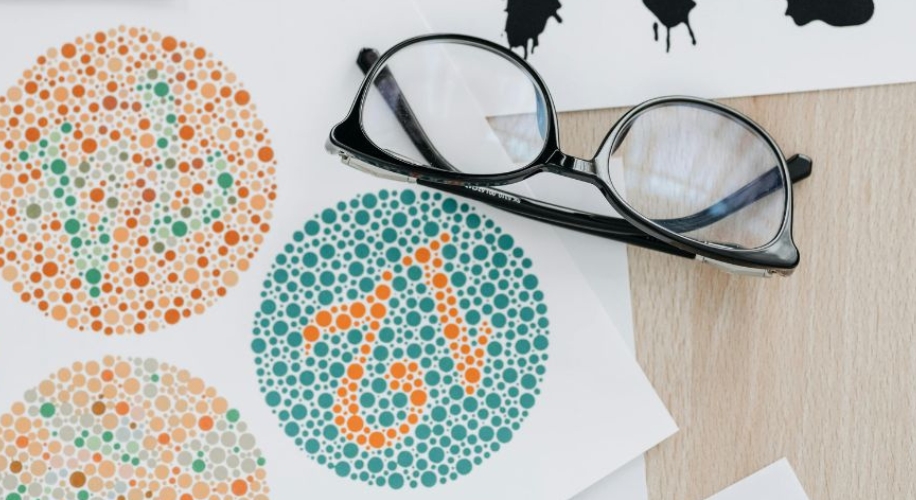
Color blindness affects millions of people, and it varies more than most assume. Here’s how each type works, how it’s diagnosed, and what can help.
What Is Color Blindness?
Color blindness, also known as color vision deficiency, is a reduced ability to distinguish certain colors. It happens in the retina, where three types of cone cells respond to red, green, and blue wavelengths. When one type is missing or doesn’t function normally, your brain receives an incomplete color signal — and shades that look distinct to most people start to look alike.
Red-Green Color Blindness
The most common type of color blindness is red-green color blindness, affecting approximately 8% of males and 0.5% of females of Northern European descent. This condition makes it difficult to distinguish between red and green hues. There are four subtypes of red-green color blindness:
- Protanomaly: In this subtype, red appears more green and less bright.
- Protanopia: Red appears black, with certain shades of orange, yellow, and green appearing yellow.
- Deuteranomaly: This is the most common form of color blindness where yellow and green appear redder, and it is difficult to tell violet from blue.
- Deuteranopia: Red looks brownish-yellow and green looks beige.
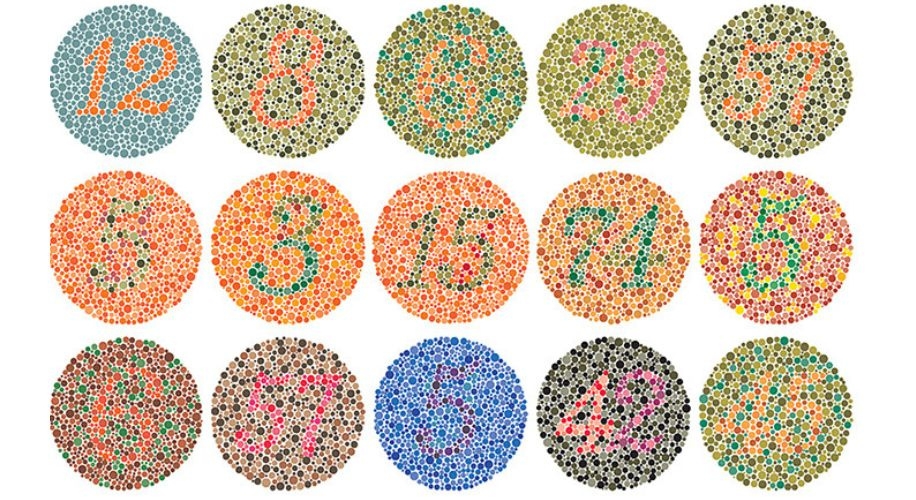
Photo from American Optometric Association
Blue-Yellow Color Blindness
Blue-yellow color blindness is less common than red-green, affecting fewer than 1 in 10,000 people worldwide. People with this type of color blindness have difficulty distinguishing blue from green and yellow from violet. There are two main subtypes:
- Tritanomaly: Those affected see blue as greener, and it can be difficult to tell yellow and red from pink.
- Tritanopia: Blue appears greener, and it can be challenging to tell yellow from violet.
Complete Color Blindness
Complete color blindness, or monochromacy, is extremely rare. Individuals with this condition see no color at all – only shades of gray. This condition is further divided into two subtypes:
- Cone Monochromacy: Two of the three cone photopigments are missing, so color vision relies on the one remaining cone type.
- Rod Monochromacy (Achromatopsia): Retinal cones are absent or nonfunctioning, leaving only black, white, and gray.
What Causes Color Blindness?
Most color blindness is inherited. The red and green cone pigment genes sit on the X chromosome, which makes red-green color blindness X-linked recessive. Men have one X chromosome, so a single altered gene is enough; women have two, so they’re affected far less often and are usually carriers. Color vision can also change later in life from aging, cataracts, glaucoma, diabetes, eye injury, or certain medications.
How a Color Blindness Test Works
A color blindness test takes a few minutes during a routine eye exam.
- Ishihara plates: Colored dot patterns that form a number. Missing it points to a red-green deficiency.
- Farnsworth-Munsell 100 Hue Test: Arranging colored caps to measure fine color discrimination.
- Anomaloscope: Light-matching that pinpoints both type and severity.
Online tests can hint at a problem, but screen and lighting differences make them unreliable. Have kids screened early — color blindness is easily mistaken for inattention in color-coded classrooms.
Common Myths About Color Blindness
“You see in black and white.” Most people with color blindness see color — they just confuse certain hues. Seeing no color at all is monochromacy, and it’s very rare.
“Only men are affected.” It’s far more common in men, roughly 1 in 12 versus 1 in 200 women, but women can be color blind too.
“Nothing can be done.” There’s no cure, but specialty color-correcting lenses, color-ID apps, and accessibility settings all help.

Living With Color Blindness
Color blindness makes color-coded charts, ripe produce, matched clothing, and some dashboard indicators harder to read. A few careers screen for color vision — commercial piloting and certain electrical and transportation roles — but most don’t.
Specialty color-correcting glasses, sold by a handful of dedicated brands, use tinted lenses to filter specific wavelengths and increase contrast between colors that normally overlap. They help some people with mild to moderate red-green deficiency, but they don’t restore normal color vision and do little for monochromacy. Try free smartphone color-ID apps and built-in accessibility filters first.
Color blindness doesn’t affect how sharply you see, so most people who have it need regular prescription glasses for the same reasons everyone else does. Start with an eye exam for an accurate diagnosis, then shop Zenni’s best-selling glasses for everyday wear.

FAQs
What is the most common type of color blindness?
Deuteranomaly, a red-green form in which green and yellow look redder.
Can color blindness be cured?
No. Lenses, apps, and accessibility settings can make colors easier to separate, but nothing restores normal color vision.
How do I know if I’m color blind?
Most people find out through an Ishihara plate test at an eye appointment. Online versions aren’t reliable enough for diagnosis.
Can color blindness develop later in life?
Yes. Cataracts, glaucoma, diabetes, optic nerve damage, and some medications can all change color perception in adulthood.

Dr. Steven Liem
Dr. Steven Liem, O.D., F.A.A.O. is an optometrist based in Pasadena, California. After obtaining his doctorate from UC Berkeley’s School of Optometry, he completed his residency in Pediatrics, Vision Therapy & Rehabilitation and became a Fellow of the American Academy of Optometry. When he isn’t busy streaming or making Youtube videos about video games, Dr. Liem aims to broaden accessibility to vision health through his involvement in optometric industry and tech.